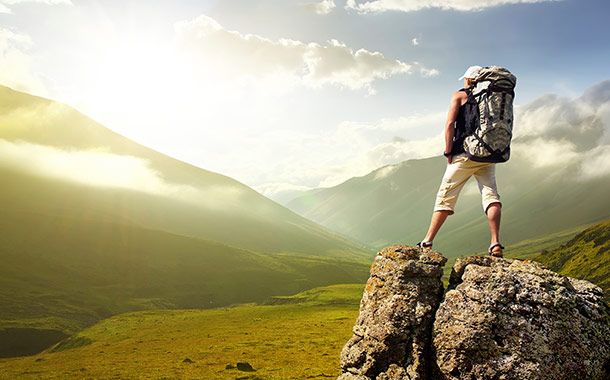

Backpack

Best bet: Salomon Agile² 12 Set
Sunglasses
Sunglasses are not to be forgotten for all the sunny hikes you’ll embark on. Choose a brand designed for outdoor activities that won’t keep falling off.
Best bet: Switch H-Wall
Tent
Tents are available in a huge variety of shapes, sizes, and prices. Choosing the right one depends on the environment you’ll camp in. Some types are made to be light during travelling. They are compact, frameless, and waterproof canvas rolls that are set up quickly and easily. If you will be hiking through jungle terrain, consider a waterproof travel hammock with mosquito nets, to stay off the ground.
Best bet: MSR FlyLite Tent
Sleeping bag
The more expensive your sleeping bag is, the more it will be intact. Don’t forget a sleeping mat as well for comfortable sleep and also protection against cold from the ground.
Best bet: Mountain Hardwear HyperLamina Spark
First-aid
A basic first-aid kit is very important. It should include a cold compress pack, bandages, sterile wipes, dressing, adhesive tape, antiseptic cream/wash, plasters, and painkillers. Someone within the group knowing basic CPR could come in handy too.
Water and snacks
Carry two full bottles of water and purifying tablets/purifying filters. Always have snacks.
Flashlights
Either a normal flashlight or a compact head lamp with a bright light, which could also be used as a reading light, will definitely be useful. Carry spare batteries with you. Matches and a lighter are useful as well.
Clothes and shoes
Don’t pack too many clothes as they take the most space in your pack. Cotton does not fit with outdoor adventures because when it gets wet, it’ll take forever to dry and you’ll feel colder. Synthetics are the perfect choice, along with wool. Clothes that have lots of pockets will be quite handy. Pack the bulkiest shoes you can find. Prepare for the cold of early mornings and late at night.Solar charger
A solar charger is essential if you just have to keep up with your emails, but how about considering dropping off the grid? It will make your adventure all the more fun and unique.
Binoculars
A good pair of binoculars is essential if your trip involves wildlife watching. To up your game, you can go for digital binoculars to record what you see in full HD resolution.
Best bet: Sony DEV Digital Recording Binoculars
GPS
While technically you can rely on your iPhone for navigation, most smartphone apps are not built for hiking and you’ll deal with poor battery life. A dedicated handheld GPS will be much more helpful. They have detailed topographic maps and can survive being dropped a lot more than phones. They can be used as a compass too.
Best bet: Garmin
Trekking poles
Some hikers swear by these poles for support on steep terrain and to generate good rhythm. It depends on personal preference.
Have a fun hike!
By Amal Ahmed